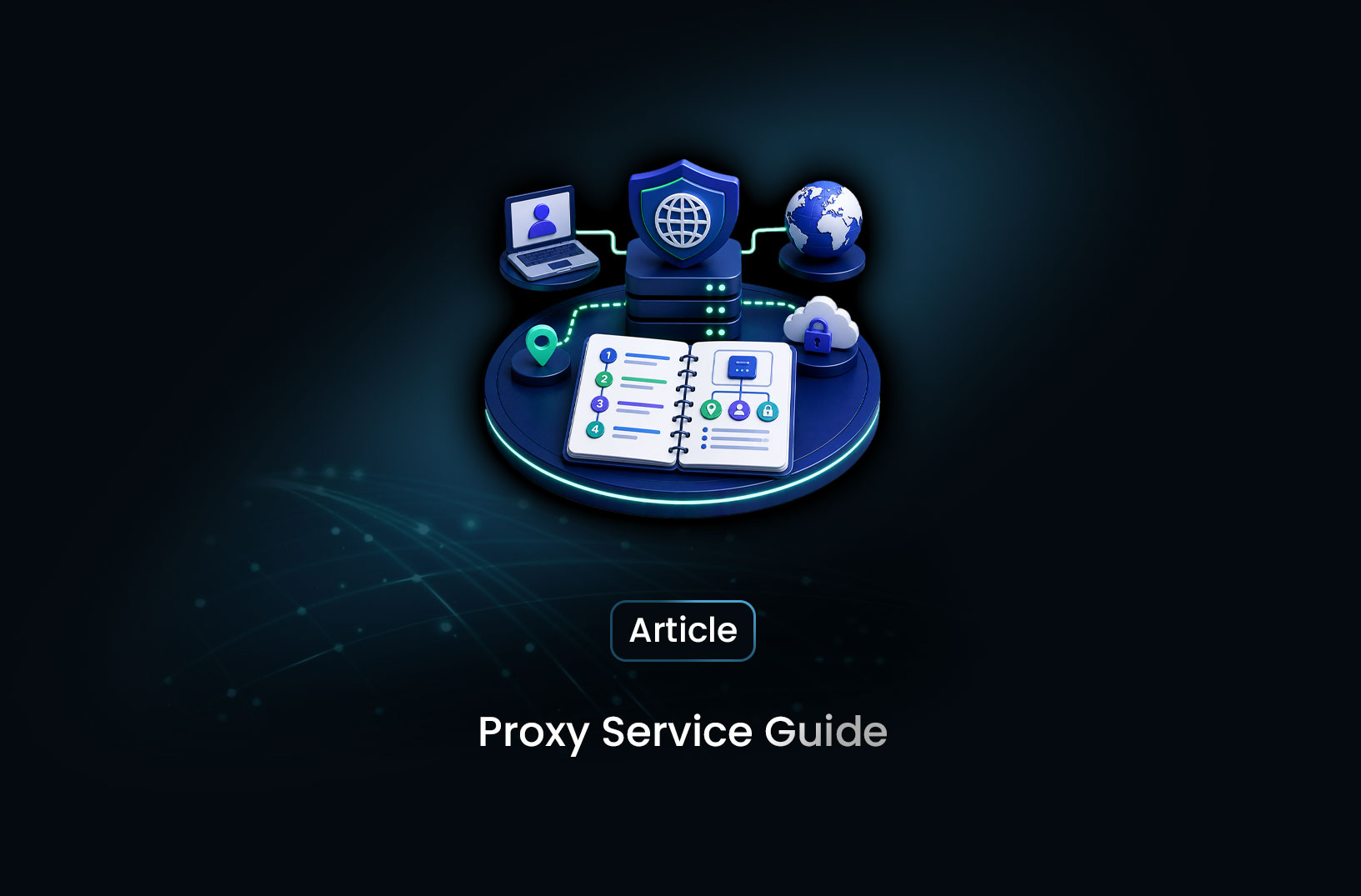
Proxy Scraper: What It Is and How to Build One
GuideLearn what a proxy scraper is, how it works, and how to build one in Python. Plus, discover a faster way to scrape with built-in proxies.
You write a scraper. It works perfectly on the first run. You schedule it for production. By the second day, every request returns a 403 Forbidden or a CAPTCHA wall. This is the story of nearly every developer who tries to scrape at scale without proxies.
A proxy scraper solves this problem — it combines a web scraper with rotating proxies so your requests appear to come from different locations and devices. In this guide, you will learn what a proxy scraper is, how to build one from scratch in Python, and how to skip the infrastructure overhead entirely using MrScraper's built-in proxy scraping tools.
What Is a Proxy Scraper?
The term "proxy scraper" has two common meanings:
A scraper that collects proxies — A script that crawls free proxy list websites, extracts IP addresses and ports, validates which ones are alive, and saves the working proxies for use.
A web scraper that uses proxies — More practically, any web scraping setup that routes requests through proxy servers to avoid IP bans, rate limits, and geo-restrictions.
Most developers searching for "proxy scraper" want the second meaning: how to scrape websites reliably without getting blocked. That is the focus of this article.
Why You Need Proxies for Web Scraping
Websites detect and block automated scrapers using several techniques:
- IP rate limiting — Hundreds of requests from the same IP trigger blocks within minutes.
- Geo-restrictions — Some content is only visible from specific countries.
- Browser fingerprinting — Anti-bot systems like Cloudflare analyze TLS fingerprints and connection patterns. A single IP making uniform requests is an obvious bot signature.
- CAPTCHAs — Once flagged, your scraper receives challenges it cannot solve.
Proxies distribute your requests across many IP addresses, making your scraper look like normal user traffic rather than a single automated bot.
Building a DIY Proxy Scraper in Python
Here is a basic proxy scraper built from scratch. This approach collects free proxies, validates them, and uses the working ones to scrape a target site.
Step 1: Install dependencies
pip install requests beautifulsoup4
Step 2: Scrape and validate free proxies
import requests
from bs4 import BeautifulSoup
import concurrent.futures

def scrape_free_proxies():
    """Scrape a public proxy list and return proxy addresses."""
    url = "https://free-proxy-list.net/"
    headers = {"User-Agent": "Mozilla/5.0 (Windows NT 10.0; Win64; x64)"}
    response = requests.get(url, headers=headers)
    soup = BeautifulSoup(response.text, "html.parser")

    proxies = []
    table = soup.find("table")
    if table:
        for row in table.find_all("tr")[1:]:
            cols = row.find_all("td")
            if len(cols) >= 7:
                ip = cols[0].text.strip()
                port = cols[1].text.strip()
                https = cols[6].text.strip()
                protocol = "https" if https == "yes" else "http"
                proxies.append(f"{protocol}://{ip}:{port}")
    return proxies

def validate_proxy(proxy):
    """Test if a proxy is alive and responsive."""
    try:
        response = requests.get(
            "https://httpbin.org/ip",
            proxies={"http": proxy, "https": proxy},
            timeout=5
        )
        return proxy if response.status_code == 200 else None
    except Exception:
        return None

# Collect and validate
free_proxies = scrape_free_proxies()
with concurrent.futures.ThreadPoolExecutor(max_workers=20) as executor:
    results = executor.map(validate_proxy, free_proxies)
    working_proxies = [p for p in results if p]

print(f"Working: {len(working_proxies)} / {len(free_proxies)}")
Step 3: Scrape with proxy rotation
import random

def scrape_with_proxy(url, proxies):
    """Send a request through a randomly selected proxy."""
    proxy = random.choice(proxies)
    try:
        response = requests.get(
            url,
            proxies={"http": proxy, "https": proxy},
            timeout=10,
            headers={"User-Agent": "Mozilla/5.0 (Windows NT 10.0; Win64; x64)"}
        )
        return response
    except Exception:
        proxies.remove(proxy)
        return scrape_with_proxy(url, proxies) if proxies else None

response = scrape_with_proxy("https://example.com", working_proxies)
This works for small experiments. But in production, the problems stack up quickly.
The Problem with DIY Proxy Scrapers
Building your own proxy infrastructure creates ongoing headaches:
- Free proxies die fast — The median lifespan of a free proxy is under 10 minutes. You must constantly re-scrape and re-validate.
- Low success rates — Free proxy lists have a 5–15% working rate after validation. Most are already blacklisted.
- No CAPTCHA handling — Your scraper simply fails when challenged.
- No fingerprint diversity — Proxies alone do not change your TLS fingerprint. Anti-bot systems still detect you.
- Double maintenance — You are now maintaining two systems: your scraper and your proxy pool. Both break independently.
You started out wanting data — now you are debugging proxy infrastructure at 2 AM. Modern scraping platforms exist precisely to eliminate this layer of complexity.
A Better Approach: Scraping with MrScraper's Residential Proxy
MrScraper's Residential Proxy gives you access to a pool of real residential IPs with automatic rotation, global geotargeting across 100+ countries, and session control — all through a single endpoint. No proxy scraping, no validation, no dead-proxy handling.
All connections go through one endpoint:
proxy.mrscraper.com:10000
Your username pattern controls the behavior: proxy type, country targeting, session persistence, and rotation. Here is how the same scraping task looks with MrScraper.
Rotating proxy — new IP on every request
Use a country-specific username without a session ID, and each request automatically gets a different residential IP:
import requests
from bs4 import BeautifulSoup

# MrScraper rotating proxy — new IP on every request
# Format: username-country-{iso3166}:password@proxy.mrscraper.com:10000
proxy = {
    'http': 'http://YOUR_USERNAME-country-us:YOUR_PASSWORD@proxy.mrscraper.com:10000',
    'https': 'http://YOUR_USERNAME-country-us:YOUR_PASSWORD@proxy.mrscraper.com:10000'
}

def scrape_page(url):
    """Scrape a page using MrScraper's rotating residential proxy."""
    try:
        response = requests.get(url, proxies=proxy, timeout=30)
        soup = BeautifulSoup(response.text, 'html.parser')
        title = soup.find('h1').text if soup.find('h1') else 'No title'
        print(f"Scraped: {title}")
        return soup
    except Exception as e:
        print(f"Error: {e}")
        return None

# Each request gets a different US residential IP automatically
urls = [
    'https://example.com/page1',
    'https://example.com/page2',
    'https://example.com/page3',
]

for url in urls:
    scrape_page(url)
Static proxy — same IP across multiple requests
When you need a consistent IP (for login flows, session-based scraping, or multi-page forms), add a session ID and duration to your username:
import requests

# MrScraper static proxy with 30-minute session
# Format: username-country-{code}-sessid-{id}-sesstime-{minutes}:password@proxy.mrscraper.com:10000
proxy = {
    'http': 'http://YOUR_USERNAME-country-us-sessid-mysession1-sesstime-30:YOUR_PASSWORD@proxy.mrscraper.com:10000',
    'https': 'http://YOUR_USERNAME-country-us-sessid-mysession1-sesstime-30:YOUR_PASSWORD@proxy.mrscraper.com:10000'
}

# All requests use the same IP for 30 minutes
for i in range(5):
    response = requests.get('https://api.ipify.org', proxies=proxy)
    print(f"Request {i+1}: {response.text}")  # Same IP every time
For full configuration options including country codes and mobile proxies, see the MrScraper Residential Proxy documentation.
No-code option: MrScraper's Proxy Scraper dashboard
If you prefer a visual interface, MrScraper also offers a built-in Proxy Scraper on the Proxies page. Enter a target URL, select a proxy country, configure options like browser rendering and retry limits, and click Run. MrScraper fetches the page through a residential proxy and returns the extracted content — no code needed.
DIY Proxy Scraper vs. MrScraper: Side-by-Side
| Capability | DIY Proxy Scraper | MrScraper Residential Proxy |
|---|---|---|
| Proxy source | Free proxy lists (unreliable) | Real residential IPs from ISPs |
| Endpoint | Multiple dead IPs to manage | Single endpoint: proxy.mrscraper.com:10000 |
| Rotation | Manual — build your own logic | Automatic — new IP per request, or sticky sessions |
| Country targeting | Limited to whatever IPs you find | 100+ countries via ISO 3166 codes in the username |
| Session control | Not supported | Built-in via -sessid- and -sesstime- parameters |
| Validation | You re-scrape and test daily | Zero — no dead proxies to manage |
| Success rate | 5–15% (free proxies) | 95%+ (residential IPs) |
| JS-rendered pages | Not supported | Available via Scraping Browser |
| Setup time | Hours (build + debug) | Minutes (one proxy URL) |
Best Practices for Proxy Scraping
- Rotate IPs on every request — MrScraper handles this automatically when you omit the session ID from your username.
- Randomize request timing — Add
time.sleep(random.uniform(1, 5))between requests to mimic human behavior. - Use realistic headers — Set a proper
User-Agent,Accept-Language, andReferer. - Choose residential over datacenter proxies — Datacenter IPs are trivially fingerprinted. Residential IPs from real ISPs blend in with normal traffic.
- Monitor your success rate — MrScraper's Analytics tab on the Proxies page provides real-time bandwidth, request counts, and success rates so you can track performance without building custom logging.
Conclusion
A proxy scraper is essential for collecting web data at scale. Without proxy rotation, your scraper will be blocked within hours on most modern websites.
Key takeaways:
- Free proxies work for learning but fail in production — they are slow, unreliable, and short-lived.
- DIY proxy scrapers require ongoing maintenance that often costs more in engineering time than a managed service.
- MrScraper's Residential Proxy provides real residential IPs through a single endpoint (
proxy.mrscraper.com:10000), with rotation, country targeting, and session control built into the username format. - For a no-code option, the Proxy Scraper dashboard lets you scrape through residential proxies without writing any code.
Ready to skip the proxy maintenance? Try MrScraper free — residential proxies, automatic rotation, and 100+ country coverage included.
Further Reading
Summarize this post
Open it in your assistant of choice with the prompt ready to send.
Take a Taste of Easy Scraping!


Find more insights here
What Is a Proxy Server? How It Works and When to Use One
A proxy server is an intermediary that routes your internet requests through a different IP address.…
Data Extraction Guide: Tools, Methods, and Best Practices
A complete guide to data extraction — methods (web scraping, APIs, ETL, OCR), tools for every use ca…
Structured vs Unstructured Data: What's the Difference?
Structured vs unstructured data explained — definitions, examples, key differences, semi-structured…